I spied this moon halo last night as I drove home from our canoe trip outfitting shop in Ely. Moon halos are created when millions of tiny ice crystals high in the atmosphere reflect light. The shape of the ice crystals results in a focusing of the light into a ring around the moon. Because the ice crystals are six-sided, they reflect light at a 22 degree angle, creating a ring that has a 22 degree diameter.
Though moon halos are certainly more common during the dogsledding season than the canoe tripping season, people are already reserving canoe trips now for the best selection of permits for their desired entry points and dates. Please contact us and we'll happily talk you through some canoe trip options. We make BWCAW trip planning fun and simple, and we enjoy sharing stories about our region and the natural world.
Welcome to the BWCAW blog of Ely Outfitting Company and Boundary Waters Guide Service!
See our websites at ElyOutfittingCompany.com and BoundaryWatersGuideService.com.
We are a Boundary Waters canoe trip outfitter, Quetico outfitter, and guide service in Ely, Minnesota. This Boundary Waters blog shares photos, stories, humor, skills, and naturalist insights from guiding in the Boundary Waters Canoe Area Wilderness (BWCAW).
Most entries are from our founder and head guide, Jason Zabokrtsky. He is the Boundary Waters Blogger.
Sunday, January 16, 2011
Wednesday, January 5, 2011
Winter Travel Routes Wind Through Labrador Tea
Our winter traveling world varies dramatically from summertime. During summer, paddling and portaging in the wilderness, we mostly avoid wetlands - for they harbor masses of mosquitoes. Plus, the prospect of stepping into a particularly mucky spot and going in up to your knees or (gasp!) waist is not most peoples' idea of summer fun.
However, the onset of winter means the mucky bogs and wetlands freeze, and the bugs have vanished. Now these wetlands make for excellent travel by dogsled, ski, and snowshoe because they are flat, protected from biting winds, and not subject to slush. The fallen snow makes for lovely enchanted forests of black spruce, weighed down with white, in the wetlands.
Although not as eye catching as the trees, a look under the black spruce or tamarack trees in the frozen bogs will likely discover a common wetland shrub called Labrador tea. While guiding, I pause and point it out along the dogsled trail, encouraging dogsledding guests to pocket a couple handfuls for later back at the lodge.
The shrub often carpets the ground and grows one to three feet tall, with leaves one or two inches in length. Fragrant, elongated leaves have a leathery green top (or, often a brownish top in winter), with edges that roll downward. The special part of these leaves is the underside. Flip them over to see the densely hairy copper-colored bottom. Naturalist and author Mark "Sparky" Stensaas calls them the "hairy armpit" leaves. I know of no other north woods plant with such a similar characteristic, and it is an excellent identity clue.
The most commonly confused similar plant may be leatherleaf, another common wetland shrub - but one that lacks the hairy underside. Also, leatherleaf leaves typically angle upward, whereas the Labrador tea leaves often droop downward or point out horizontally.
In late May through June, once the mosquitoes have returned and the dogsleds are stored, Labrador tea blooms with dime-sized white flowers - each with five petals. If you are not in the wetlands at that time of year, you may see the flowers while paddling along boggy shorelines.
With such a name, it is no surprise that people steep the leaves in hot water for five minutes or so to make a hot beverage. I've found that placing a large handful of leaves into a coffee filter, and dunking them in a hot mug of water for five minutes is a simple way to prepare the herbal drink with easy cleanup. The concoction can taste quite woodsy and few people claim it to be particularly pleasing straight up. However, a healthy dose of cream and sugar, perhaps not surprisingly, makes for a delightful occasional beverage.
Labrador tea is sometimes called medicine tea, Indian tea, swamp leaf, muskeg tea, or Hudson's Bay tea. The reference to medicine probably relates to the fact that Native Americans, such as the Chippewa, used the tea to treat a range of maladies including colds, digestion issues, asthma, kidney problems and fever.
Although the beverage may provide some health benefits and is commonly referred to as a desirable tea drink, it is important to know that the leaves contain a potentially poisonous compound. That's probably why you won't find this tea on supermarket shelves. Thus, the tea should only be consumed infrequently and not in large quantities. To limit your intake, maybe only drink Labrador tea while you're on a dogsled trip, unless, of course, you're a dogsled guide.
Sunday, January 2, 2011
Slush alert for Ely area lakes!
After almost a foot of snow in the last several days, many lakes are mired in slush. This pic shows the bottom of my skis slushed/iced up after trying to ski across White Iron Lake today.
Sunday, November 14, 2010
Winter's Arrival in Ely
Sunday, November 7, 2010
Final Canoe Repairs of 2010
Above average temps in the fifties today allowed me to do some maintenance on "Lilly," a cedar strip canoe I built several years back. She took the 2010 season off while I worked on some fiberglass and epoxy repairs to the turn of the bilge. I put the first coat of varnish on the hull exterior today, and hope to complete the second coat tomorrow. She'll be ready for the 2011 season!
Sunday, October 31, 2010
Moose Brains
Today's Halloween, so here's a moose brain. It's about the size of a grapefruit.
While this post is a lighthearted holiday entry, the brain shown here is undergoing important scientific research that may help people better understand the moose population in Minnesota. I helped extract this brain from a bull moose harvested up the Echo Trail near Ely, MN, earlier this month. At the time, I was assisting the MDNR with the moose check-in and sampling station in Ely.
Scientists know that a brain parasite fatal to moose is causing moose mortality, and that the parasite is carried by white tailed deer. The full extent and effect of the brain parasite issue is still being researched.
Saturday, October 16, 2010
Garrison Keillor, Eat Your Heart Out
Lake Wabegon is Garrison's fictitious community on the edge of the prairie. It's full of Norwegian Lutherans and colorful characters.
Here in Ely, Minnesota, we live on the edge of the wilderness with plenty of colorful characters, and some Norwegian Lutherans.
Today we're driving south to see the live performance of Garrison's radio show, A Prairie Home Companion, at the Fitz in St. Paul. When I'm driving south, I usually stop at SuLu's Espresso Cafe a half hour south of Ely in Tower. I typically order a skinny latte (fufu, I know, but SuLu's are my favorite).
You'll see the second drink listed on the menu behind the owner, Brenda, is the "Lutheran."
What is the "Lutheran?" Every Sunday after church, ladies from the Lutheran church stop by SuLu's for coffee. But the SuLu "Coffee" is just too strong for them. They asked to cut it with a little water. And should they pay full price for a coffee that has extra water? Of course not. Thus, the "Lutheran"coffee is a nickel less.
Garrison Keillor, eat your heart out, and be sure to stop at SuLu's on your way to Ely for a Boundary Waters canoe trip.
Thursday, October 14, 2010
Pine Marten Breakdown
I awoke to a Pine Marten peering from an overturned canoe outside my bedroom window this morning. Then a second one appeared. Then they loped around the cabin to the deck. Once on the deck, one of them took up residence in a flower pot, and the other one decided that looked like a fine idea. This video shows what ensued. Keep an eye on which one starts in the planter and which one ends up in the planter.
Pine Martens are about the cutest creatures in all of the North Woods. They are typically chocolate-brown, have a golden throat patch, and a 12 to 18 inch body followed by a seven to ten inch tail. They are smaller than the related fisher (30-47 inches long, including tail). As omnivores, they subsist on Red-backed Voles, squirrels, rabbits, mice, chipmunks, birds, insects, seeds, worms, and berries. They reportedly particularly like raspberries. Pine Marten are excellent climbers, freely jump between trees, and can rotate their back hips to run headfirst down a tree trunk.
They are active all year. In winter, you may see their paw prints in the snow. Their tracks are less than two inches wide and show five toe pads around a rounded heel pad.
The Pine Marten stick to high ground and loathe water that mats their unoiled fur. In summer, you may seem them on portages. However, the brown cat-size creature dancing along the shoreline rocks is more likely to be its water-loving relative with a contrasting white throat patch, the Mink.
Wednesday, October 13, 2010
Women in the BWCA Wilderness
I recently guided two all-women's camping trips. What a blast! Both groups of talented, smart and go-get-em women sought out a female guide for their Boundary Waters camping experience.I have guided canoe trips over ten summers for teenage and adult women in the Boundary Waters Canoe Area Wilderness and Quetico Provincial Park, working at the Northern Lakes Girl Scout Canoe Base and here at Boundary Waters Guide Service. I have become a believer in the truly different and remarkable experience that is possible with a group of only women.
As much as I tried to deny it when I first started guiding canoe trips in the Great North Woods, women really don't have the muscle mass that men do. The canoe that men (of many ages) can pick up without any technique does not go on my shoulders without teamwork or some real practice. That applies big-time to groups of first-time women to the Boundary Waters. Teamwork really becomes key.
During an orientation before getting out on the water, we tackled portaging technique, which is typically the most intimidating aspect of a BWCAW trip. Each group learned how to use three people to flip the canoe upside-down, and then each person took a turn carrying the lightweight Kevlar canoe. The task was surprisingly conquerable to most, even a breeze to a couple of the stronger women!
The eight ladies of the first group were friends since having their children involved together in Girl Scouts or Boy Scouts, and boy, were they a get-er-done kind of group. They gathered armloads of firewood, found time to relax, and shared much laughter. Some felt a little nervous about the physicality of a canoe trip, others just looked forward to relaxing and not having to cook. These ladies were all made for this kind of canoeing adventure, amusingly calling themselves "Kate Plus Eight."
My second group of ladies, four this time, were nurses or nurse practitioners with numerous stories about the many babies they had delivered. Lovely women with great stories, also quick learners and very capable in a canoe in the gusty conditions we experienced. These four ladies had worked together in their profession for years and were absolutely great at working with each other in this new environment.
These two trips in the late summer season had lovely weather -- highs up toward 70 degrees and low temps in the 40s, sometimes dipping down to the 30s. Since women typically tend to feel colder, I used another trick for our ladies: we filled everyone's water bottle with hot water overnight to keep our sleeping bags toasty warm. It proved to be a delightful surprise.
It seems to be true no matter the woman's age: after experiencing an all-female canoe camping trip, there is a definite sense of empowerment. I believe these already intelligent and accomplished women were no exception. Being "out there" for three or four days and relying only on each other for forward movement tends to build trust, make a lot of fun moments, and create an experience that will not be quickly forgotten.
Sunday, October 3, 2010
Boundary Waters Autumnal Colors
Friday, September 10, 2010
Bob Cary Print Sale and Our Last Hurrah of the Summer
Jackpine Bob Cary is an Ely legend: a radio personality, an artist, a fisherman, and generally a beloved character who passed away a few years ago. His daughter Barb Cary Hall is hosting a big sale of all things Cary, including his prints, both color and black & white, and his books. Many of his beautiful pieces are signed and numbered. These pleasant folks stopped by today and found some great classic prints at a wonderful price. While here at our shop, Barb is also swapping stories about her dad. Come on by anytime this weekend to share a story or two. Our shop is open from 10am-4pm every day this weekend, to go along with Ely's Harvest Moon Festival. In addition to the Bob Cary print sale, everything else in the store is at least 10% off, with a few items even 40% off. Come on by! We'd love to see you here!

Thursday, September 9, 2010
Bluegills in Their Underwater World
We found these extraordinarily curious Bluegills on Hustler Lake in the Boundary Waters. They are called Bluegills thanks to the dot of color you can see on the side of both fish. That blue or black spot is actually an extension of the gill cover. They are excellent fish to eat, and these particular fish sure didn't make themselves too hard to bring in. Lucky for them, all I had was my camera! They are known for nibbling on bait, and you might notice that one of the fish went for my finger shortly after I put the camera in the water. (Apologies for jerking the camera a little at that point... I wasn't sure if it would hurt! In fact, I don't think I even felt it at all.)
Saturday, September 4, 2010
Day Hiking in the Boundary Waters on the Sioux-Hustler Trail
We discovered that the nearly mile-long Oyster to Hustler portage is flooded out for about ten rods (or canoe-lengths). While a few portages may have some muck and mud, I have never seen another portage as flooded as this. Not to be dissuaded, our group went for it.
Fortunately, it was solid ground as we waded through the mid-thigh-deep water and headed on down the trail on a perfect day. We turned on to the Sioux-Hustler trail from the portage and shortly discovered an extraordinarily large beaver dam. The beavers here had been hard at work for years to create this stunning piece of engineering.Though this 100-foot long dam was constructed like all beaver dams in such a fashion that a person can walk on it, our group decided to turn back and investigate the other direction of the trail. Upon a high rock, we found these beautiful specimens of Gray Reindeer Lichen, sometimes called Caribou Lichen or Caribou Moss. It is named for its obvious resemblance to the antlers these animals sport through the summer months. It is also the primary source of food farther north for caribou in the winter. Caribou were once found occasionally in this corner of Minnesota. Now they are only very rarely found in a small portion of northwestern Minnesota, coming down occasionally from Canada.
These lichens probably took around 80 to 100 years to grow up to the eight-inch height we found. Lichens are a complex partnership of fungus and algae, and are pioneers in bare, rocky areas. They break down rock minerals with their lichenase acids, creating a small crack in the rock where water can freeze and ultimately create more cracks in the rock. This makes a place for the lichen to gain a foothold and thrive. Dust and dirt blow in, slowly creating organic build-up, and ultimately allowing more growth to eventually come in. As part of their assurance of success, the lichen dries out with the weather. During a dry spell, the fungal portion of the lichen thickens the walls and slows or shuts down the photosynthesis process to await a more friendly environment. This ensures that it can survive the extreme heat and cold of northern Minnesota. In the summer, after a dry spell, the slow-growing plants will crunch down into dust under weight, which is why our group stuck to the trail.
Tuesday, August 24, 2010
The Lovely Painted Lady

Greetings from this lovely Painted Lady butterfly living near Wood Lake in the Boundary Waters Canoe Area Wilderness!
This beautiful butterfly may look familiar to you, and for good reason: they are quite common, even around the world. They migrate from Mexico all the way to Canada just below the Arctic circle and are also found around the globe, including Europe, Asia, and Africa. In fact, because of this multi-national policy, this butterfly has the nickname "Cosmopolitan." The only places the Painted Lady (Vanessa Cardui) is not found is Antarctica and Australia.
Unlike the Compton Tortoiseshell Butterfly, the Painted Lady lays one egg at a time, on the top of a plant leaf. Once the larva grows into a caterpillar, this animal loves to eat thistle. This gives it yet another name: the Thistle Butterfly. Like other butterflies, once well-fed, it wraps itself in silk, changes form, and emerges as the lovely butterfly we see in the summer here in northern Minnesota.Thursday, August 19, 2010
Trail Work in the BWCAW
We ran into this group of hard-working Minnesota Conservation Corps volunteers out on the trail recently. It had been a hot and humid week, and this day was certainly no exception. These folks had been working hard most days since mid-June.
Often, portages require some maintenance, particulary those that are heavily-used or particularly wet. As portages get trod over, they can become muddy and mucky, particularly in a rainy summer. When that happens, many people tend to walk around the mud puddle instead of through it. That causes the mud puddle and the trail to get wider and wider, as portagers trample down the natural growth on either side of the trail.
This team was gathering rocks by digging into the shallow dirt and bedrock a short distance off the side of the trail and using sledge hammers to break large rocks into smaller pieces, digging out the main portage trail, adding those rocks upon which to walk, and surrounding the rocks with dirt. Not an easy task, and certainly made harder by the hot and humid conditions of this particlar day.
The work is hard, but it will last a long time into the future. There are 42 Conservation Corps volunteers out in the Boundary Waters this summer, plus more elsewhere in Minnesota doing trail work. All of these "MCC" members are ages 18 to 25, and are part of the Americorps program, which saw a big boost with federal stimulus money last summer. The Conservation Corps members are now enjoying their second summer in the Boundary Waters Canoe Area Wilderness, with hope for many years to come.
This particular group of two women and three men seemed exceptionally pleased to be out there, despite the fact that the only non-mud color on every person was their yellow Conservation Corps-issued hard hat. A job well-done!
Thursday, August 5, 2010
Compton Tortoiseshell Butterfly
We found this pretty butterfly out in the Boundary Waters recently. It alighted on our dark-colored life jackets, shirts and pants multiple times. Perhaps it was warming itself, even with the sun already fairly high.It is the Compton Tortoiseshell (nymphalis vaualbum), which is a species found in much of the northern half of the United States. We felt lucky to find such a beautiful specimen that was also helpfully still for a photo.
This butterfly, like most others, eats only liquids as an adult. However, unlike many other butterflies whose main source of nourishment is nectar from wildflowers, this butterfly prefers sap and rotting fruit. Fortunately, there are plenty of raspberries and blueberries this season! The adult lays her eggs in clusters, typically in hardwood forests. This particular butterfly likely started out life on one of our plentiful paper birch trees, as it emerged from its egg stage. As a caterpillar in the larva stage, it started out munching on the tasty birch leaves. After gaining enough nourishment, it then transformed itself into the pupa stage (also called chrysalis), and later emerged as this beautiful butterfly.
Wednesday, July 28, 2010
Cedar Waxwings and Pin Cherries

Summer is a busy time for Cedar Waxwings here in northern Minnesota. Much of the summer, you will find these birds on their perfect perch waiting for dinner to pass by. When the 7-inch bird spies its scrumptious meal of mosquitoes or moths, it swoops down, snatches the bugs up, and returns to the same perch to await more unaware passersby. These birds typically eat the abundant bugs of summer, but come mid-July, tasty berries lure them away from their carnivorous ways.
We found these Cedar Waxwings enjoying quite a meal in the BWCAW from the relatively small (not more than 20 feet high or so), smooth-barked Pin Cherry tree. The Pin Cherries ripen in mid- to late-July, and are bright red and partially translucent with a large pit in the middle. Fortunately for the birds, who are wild about the cherries, the fruit is very sour to our human taste buds. It takes a lot of sugar to make the Pin Cherry taste decent!While a lot of fruits fall to the ground during the tree's short lifetime of 25-30 years, you won't find this tree all over the forest. It needs plenty of sun. Often the pits of the Pin Cherries fall in the shade of the tree itself where they can't immediately germinate. Fortunately, the pit has a waterproof coating which prevents the seed from rotting, even as long as fifty years or more! When a disturbance eventually happens, like a strong windfall or forest fire, sunlight fills the ground and the seeds germinate en masse. Soon after, there will be a solid stand of even-aged Pin Cherry trees. The trees that we found were in a very sunny spot on the top of a high hill overlooking one of the many beautiful lakes of the Boundary Waters.

There was one other little guest hiding in the tree. This chipmunk was perched a few feet up in the tree enjoying his own snack of Pin Cherries!
Labels:
Boundary waters,
BWCA,
BWCAW,
Canoe Trip,
cedar waxwing,
chipmunk,
Ely,
pin cherry,
summer
Saturday, July 17, 2010
Underwater Photography in the BWCA
Travel in the Boundary Waters Canoe Area Wilderness is mostly via lakes and waters. So how do you deal with cameras around all that water?
Some people embrace the water and bring along waterproof cameras. They definitely take some of the stress out of the possibility of dunking an expensive camera. Kate is carrying a waterproof camera this summer and she really likes that she can keep it at hand rather than packed away in a cumbersome case. She shot this photo by holding her camera under water and pointing it toward the sky. My favorite part of this perspective is that you can see the air bubbles on the underside of the lilly pads!
Kate is using an Olympus waterproof shockproof camera and she likes it.
If you're interested in photography and want to improve your skills while immersed in the BWCAW, consider participating in our Boundary Waters Photo Workshop led by professional magazine and nature photographer Layne Kennedy. More info on our BWCA Photo Workshop is at this link: http://boundarywatersguideservice.com/PhotoWorkshop.html. Most folks bring cameras that are not waterproof on photo workshops, and we take special care to make sure they return safely.
Friday, July 9, 2010
Fly Amanita - Storybook Mushroom in the BWCAW
Fly Amanita is the quintessential toadstool we started drawing as kids in elementary school. It's also known as the "fly mushroom" or "fly poison mushroom" because it is believed a saucer containing Fly Amanita in milk will attract and kill flies.
The young mushroom begins covered in a universal veil and may be misidentified as a Puffball mushroom. As the mushroom grows, the veil breaks apart and its remnants are seen as whitish "scabs" on a bulbous cap. As it continues to mature, the bulbous cap becomes more flat and the white gills are visible on the underside of the cap. When the mushroom reaches maturity, the outer edges of the cap may cup upward.
The Fly Amanita is indigenous to northern Minnesota. It is usually yellow-orange here - in contrast to bright red varieties elsewhere. The cap size ranges from 3 to 10 inches wide, and the white stem grows 3 to 7 inches tall.
They are found growing from the ground - not from trees - from June through September. They are typically found among stands of pines and aspens.
The toxins muscimol and ibotonic acid are contained in Fly Amanita. Ingestion can cause serious internal injury and, in some rare instances, death. They are generally considered poisonous and not edible. However, some report that the toxins may be parboiled out of the fungus, and rumors surround the hallucinogenic effects caused by people eating these dangerous mushrooms. Lore has it that the Vikings of the eleventh and twelfth centuries ingested them and found superhuman strength. And Lewis Carroll, author of Alice in Wonderland, was a known experimenter with drugs. His book illustrations included a white-spotted red mushroom appearing to be Fly Amanita. Another side effect of ingesting Fly Amanita is macropsia - a condition making things appear larger than life size. Sounds like the book, doesn't it.
I snapped these photos recently on a portage along the Little Isabella River in the BWCAW. During the canoe trip, deer flies buzzed around our heads. It makes me wonder: Might Fly Amanita in a milk concoction work for meddlesome deer flies around camp?
Wednesday, June 23, 2010
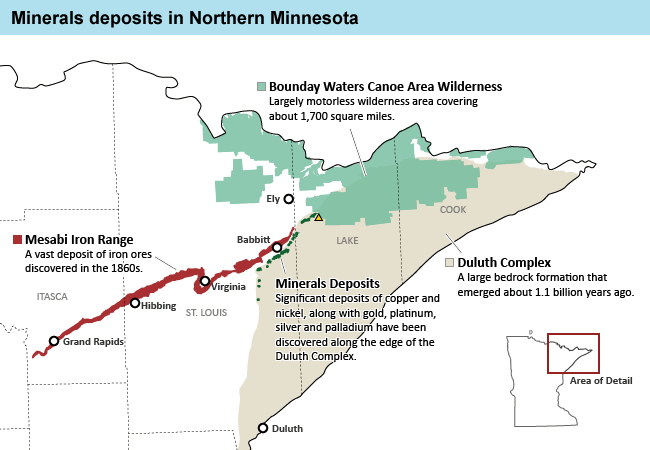
Sulfide Mining on the Edge of the BWCAW
Border Lakes Outfitting and Jason Zabokrtsky teamed with the Friends of the Boundary Waters recently to raise awareness for the potential environmental impacts of proposed sulfide mining operations on the edge of the Boundary Waters. Jason guided the group of environmental advocates and media representatives, including Stephanie Hemphill of Minnesota Public Radio and John Myers of the Duluth News Tribune.
See the Duluth News Tribune Article here. Listen to the MPR story here, or see the full text below.
Ely, Minn. — Six mining companies are doing exploration work that could lead to mines near the Boundary Waters Canoe Area Wilderness, and that's got a lot of people concerned.
The companies are drilling deep holes, probing huge deposits of valuable copper, nickel, gold, platinum, and palladium.
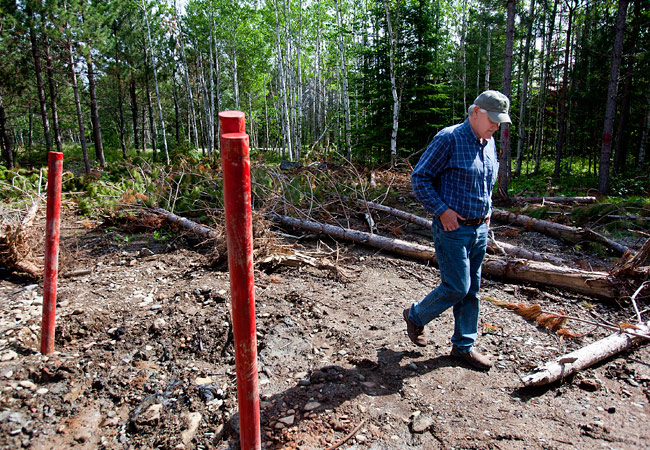
Steve Koschak looks at a drill site near his River Point Resort on the South Kawishiwi River just east of Ely, Minn.
"This goes 24-7," he says of the constant drone of a drilling rig.
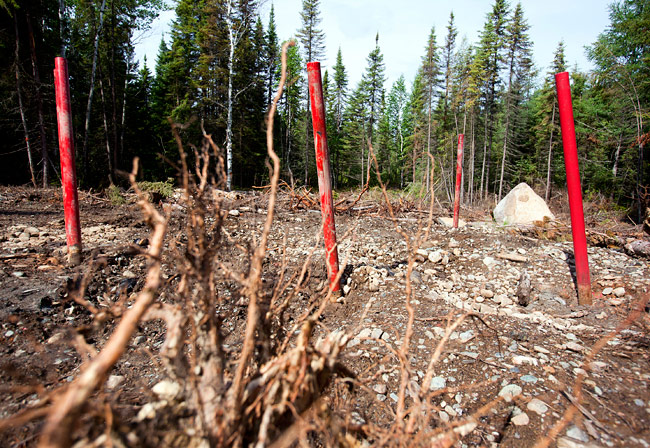
A contractor for Ely-based Duluth Metals is drilling a six-inch hole, about 3,000 feet into the earth. A trickle of water runs to a pit a few feet away. The pit holds water and a scum of gray muck, finely ground rock from deep in the earth.
"If you were to analyze all that, there's probably copper-nickel in that. But look what it's going into, it's going into the swamp," he says. "That's all this is, is a network of spruce swamps, all interconnected, this all goes into Birch Lake, all this water."
When the drilling is done, workers will bury the muck on site, a state requirement. The trouble is, around here there are so many wetlands, it would seem impossible to keep the muck out of the water system. Duluth Metals officials say there won't be enough mineral waste here to be any cause for concern.
This drilling is a precursor to what could be a deep shaft mine, more than half-mile below the surface of the earth. A mine would produce tons and tons of ground-up waste rock.
And this is sulfide rock. When it's brought to the surface, a chemical reaction occurs that produces sulfuric acid. If the rock is not carefully isolated from air and water, it can acidify nearby streams and wetlands -- possibly enough to poison the life in the water.
In many mines, discharges also contain traces of heavy metals such as lead, arsenic and manganese. The problem is called acid mine drainage, and it's happened wherever copper mines have been drilled.
The advocacy group Friends of the Boundary Waters Wilderness has organized a canoe trip for reporters to show how close the mining operations are to the Boundary Waters wilderness. We put in at entry point 32 on the South Kawishiwi River.
We pass turtles sunning themselves on rocks, and a pair of mergansers keeping a close eye on their young brood.
"This is where all the mining exploration's going on, just to the east of the river," says our guide, Jason Zabokrtsky. He points out that the drilling is going on about three miles south of the edge of the Boundary Waters. But here the river turns north and then flows into the heart of the wilderness.
"Into Fall Lake, then into Newton and Basswood Lake, across to upper and lower Basswood Falls, into Crooked Lake, into Iron Lake, across Curtain Falls, and into Lac la Croix," he says. "All really well-known Boundary Waters lakes."
Some people who live near the potential mining sites are worried. Bob Tammen, who lives in Soudan, about 20 miles from Ely, and has vacation property on the South Kawishiwi River, says he doesn't trust the state to protect the environment. The state, he said, hasn't been able to completely clean up pollution from the Dunka pit, a waste site from a taconite operation that accidentally exposed sulfide rock 50 years ago, and ever since has been leaching metals into a nearby creek.
"We've been trying for 30 years to get the Dunka site cleaned up. My contention is, if the state of Minnesota, working with the mining industry, can't clean up a mining site in 30 years, why should we ever grant a permit for a copper mining operation?" Tammen says. "We know that copper is generally in sulfide ore bodies, whereas our iron mining industry is generally in oxide ore bodies, which is not as damaging as sulfide. They haven't been able to manage the iron mining industry; we should not, at this time, trust them to permit a copper mining industry."
State officials say the Dunka problem happened before rigorous rules were imposed on mining operations.
The Minnesota Pollution Control Agency's Ann Foss says it's difficult to solve an unexpected problem, but the experience at Dunka has taught the agency a lot about how sulfide rock reacts when exposed to air and water. She says that experience will help inform environmental reviews of any sulfide mining proposals.
The Friends of the Boundary Waters has backed legislation at the state level to beef up requirements on financial assurance -- similar to the escrow fund that BP has agreed to set aside for the ongoing oil spill in the Gulf of Mexico. Last year, the Minnesota measure died in committee.
Some of the neighbors here, around the edge of the Boundary Waters want to go further: they want the state to prohibit sulfide mining unless a company can point to one place in the world where a mine has operated without polluting water. Since a similar law passed in Wisconsin, no mines have been built in the state.
The exploration is happening on the southwest edge of the Boundary Waters. Fifteen miles to the west is the town of Ely.
There are varying opinions in Ely on the exploration and possible mine development. The area has long been dependent on jobs in mining, logging, and tourism. Some people are excited about a new source of good-paying jobs. They still remember when the underground mine in Soudan used to ship tons of rich, iron ore. It closed in 1962 and now is a state park.
Duluth Metals has an office in Ely, in a house on a quiet street. The walls are covered with colorful geologic maps, and in an attached garage there are lots of core samples from those drill sites down the road.
David Oliver, the project's manager, is very excited about the minerals that lie more than a half-mile beneath the surface, on 1,500 acres near the South Kawishiwi River.
"We have now drilled 170-some drill holes that verify a resource in excess of 900 million tons that was never on the books before," Oliver said.
He says a mine tapping into that resource could employ 400 people for decades to come.
Copper and nickel, and the associated precious metals, are used in everything from electric wires and computers, to catalytic converters and rechargeable batteries, so demand is going up all the time.
The combination of higher prices and improved technologies to recover the minerals is generating new excitement about a deposit that geologists have known about for a long time. Oliver discounts worries about polluted groundwater. He says the core samples are solid, nearly free of cracks, so it wouldn't be easy for any polluted groundwater to travel through this ancient rock.
And, he says, the waste rock will contain so little sulfur that the kind of pollution that has occurred at other mines is unlikely.
"This is deemed below any threshold that would generate acid drainage," Oliver says. "It just doesn't have enough sulfur to do it."
Until recently, a different company -- Polymet -- was the front-runner in the race for copper-nickel in Minnesota.
Polymet's property is just south of the land Duluth Metals is exploring. The Minnesota DNR and the U.S. Army Corps of Engineers did a draft Environmental Impact Statement for the Polymet project, but the federal Environmental Protection Agency did a scathing review of the work, saying it was inadequate. It will take more than a year to re-do it.
Meanwhile, Duluth Metals' new partnership with Antofagasta, a Chilean company, provides enough money to move that project ahead quickly. David Oliver says Duluth Metals should be ready for environmental review in about three years.
Subscribe to:
Posts (Atom)