Welcome to the BWCAW blog of Ely Outfitting Company and Boundary Waters Guide Service!

See our websites at ElyOutfittingCompany.com and BoundaryWatersGuideService.com.

We are a Boundary Waters canoe trip outfitter, Quetico outfitter, and guide service in Ely, Minnesota. This Boundary Waters blog shares photos, stories, humor, skills, and naturalist insights from guiding in the Boundary Waters Canoe Area Wilderness (BWCAW).

Most entries are from our founder and head guide, Jason Zabokrtsky. He is the Boundary Waters Blogger.

Showing posts with label Arctic. Show all posts

Monday, November 30, 2009

Northwest Passage Dogsled Expedition - Why They Do This

Tomorrow Chris and Lisa start driving north. The accompanying photos show the sparkling new 14' sledge which they will christen once arriving in Inuvik.

Why do they do this, and why is this expedition unique?

This is nothing less than an epic journey. Chris and Lisa will face the extremes of adversity: bone-chilling cold of 50 below air temps and colder, brutal wind chills dropping temps to inhuman depths, hungry polar bears, blizzards, thin ice over deadly water, and the everyday challenges of life on a tipping edge that requires living in the moment to survive.

One must have a certain predisposition to entertain ideas of expeditions of this sort. Virtually no one on the planet - save that certain fraction of a percent of truly adventurous souls - would consider such a journey.

The dogsled journeys of Greenlandic polar explorer and anthropologist Knud Rasmussen originally inspired Lisa to consider this route. Rasmussen is credited as the first to cross the Northwest Passage by dogsled. His journey is recounted in a classic of polar expedition literature: Across Arctic America (1927). While reading the book, Lisa developed a romantic notion of dogsledding the Northwest Passage. The idea stuck.

As for Chris, he's stuck on dogsledding, the Arctic, pushing the envelope, and Lisa. The expedition was an easy choice.
This trip is somewhat unique in its noncommercial status, and walkabout nature. By that I mean it is really an expedition conducted for themselves. There are no corporate sponsors. There are no press releases or obvious desires for press coverage. There are no clients to satisfy. There is no book deal or obvious desire for one. There is no cause being advanced or charity being endorsed. The expedition doesn't even have an official name.

Instead, it is two people alone on the Arctic snow and ice with their dogs. Should they fail, it will be by only their own measurement - not the measurement of others - and not gauged by reaching a certain point on a map.

In the eyes of people like myself who look at those who see adventure and move toward it, they have already succeeded.

Tuesday, April 14, 2009

Hudson Bay Recap

We've returned happy and healthy from our Hudson Bay dogsledding adventure.

Every spring, after the Minnesota dogsledding season ends, Wintergreen Lodge leads dogsled adventures to various destinations such as the North Pole, Greenland, Svalbaard, other Arctic locations, and the Rocky Mountains. Eight of our Wintergreen Dogsled Lodge guides left Ely by truck and dog trailer on April 3 bound for Churchill, Manitoba, via truck, train, dogsled, and ski. Local Ely Wintergreen guides who joined the trip include Paul Schurke, LynnAnne Vesper, Kate Ford, Don Watson, Ellen Root, Dave Freeman, Amy Voytilla, and Jason Zabokrtsky.

We drove to Thompson, Manitoba, boarded the "Tundra Train" going north toward Churchill, and then got off the train at a tundra stop for a six day, hundred mile journey by dogsled and ski to Hudson Bay and Churchill. The trip also included five additional adventurers who joined to learn about dogsledding, winter camping, Arctic wildlife and tundra travel. A unique feature of this trip is that schoolchildren around the globe followed our progress via electronic updates to WildernessClassroom.com, an educational nonprofit led by Dave Freeman.

We experienced dogsledding on the frozen Manitoba tundra and pack ice of Hudson Bay, endured the unrelenting frigid winds of vast open expanse, and journeyed along the tracks of recent polar bears and polar bear cubs. This photo shows our team on Hudson Bay. Pack ice extends to the horizon.

Friday, April 10, 2009

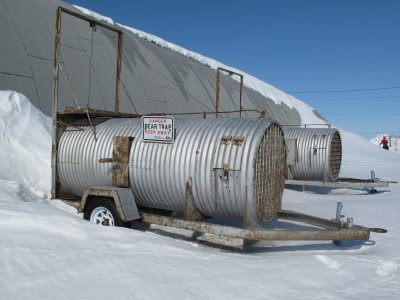
Polar Bear Jail


As we arrived in Churchill, we dogsledded to the Polar Bear Jail. It is where problem bears are taken, on the edge of town. These photos show the polar bear traps used for the problem bears.


Thursday, April 9, 2009

Churchill Northern Studies Center


We spent our day dogsledding and skiing with our heads down and noses angled away from the wind. Sustained winds blasted us as we traveled along the coast of Hudson Bay to the Churchill Northern Studies Center. Wind speeds peaked at about 30 mph, with an air temp of about 0 degrees F today.

The Center is an incredible change from the camping we've been doing. It is heated, and has hot showers, a full kitchen, and internet access. The Center is a base for polar bear and other arctic researchers.

When we arrived they had us sign a stock form acknowledging the risk of polar bear attacks. One section of the form forbids us from camping here because of the danger. It seems ironic to be signing such a document after all the camping we've done this week.
Tomorrow we will dogsled and ski about 10 miles to the town of Churchill.

Wednesday, April 8, 2009

Windbound

We are in the midst of an all out gale. Winds blowing upwards of 35 mph have stopped us in our tracks. Air temps are about 10F, but the wind chill has pushed temps into the deep freeze.

Blowing snow is piling up in drifts around the dogsleds and we have hunkered down at an abandoned research station on the shores of Hudson Bay. We have kept warm building snow walls to shade the dogs from the wind.

A photo shows our dog, Franky, behind his snow wall. Another photo shows a dogsled getting drifted over.

We are passing the time resting, snacking, playing games, enjoying conversation and waiting for the weather to break.

We continue to follow proper protocol for camping in polar bear country. For example, you see in the photo of camp that the dogs are staked out in rows to the left and right, and we sleep in between them. This configuration ensures that the dogs sound off should a polar bear approach in the night.

Tomorrow we will hopefully awake to lighter winds. We will dogsled to the Northern Studies Center near Churchill.

Tuesday, April 7, 2009

Hudson Bay!


The weather has remained ideal. The sun continues to shine brightly and we are slathering on sunscreen. The wind has calmed today.

The scenery is changing rapidly. As we move further north, the trees are getting smaller and smaller, and fewer and fewer.

The efficient traveling conditions allowed us to log 25 miles today. Our tired bodies felt uplifted when we arrived at Hudson Bay and its shining expanse of white flatness this afternoon.

Today we saw a white arctic hare that blended in with its snowy surroundings, and we saw a fox scampering across the tundra in front of us.

We pulled into camp at about 6:30 tonight. We are camped at an abandoned research station on the shores of Hudson Bay.

Most of the area polar bears have recently moved onto Hudson Bay to hunt seals. Tomorrow we will venture out onto the bay by dogsled to see what the ice holds.

Monday, April 6, 2009

Covering Miles

We covered a lot of ground today - about 23 miles by dogsled and ski.

We are passing through some brushy areas with small trees. The snow collects in these areas and can mean deep, fluffy, difficult to get a dogsled through, conditions. The dogs bottom out in the deep snow and the sled starts to snowplow. However, none of these places slowed us down more than we expected.

The wind has changed from a NW to an easterly gail, and we wonder what change in weather that may mean. The wind of 15-20 mph today dropped our windchills to subzero. The air remained in the teens or low twenties.

We saw more polar bear tracks in the snow today.

We pulled into camp at a little after 6 PM and luckily found a good spot out of the wind.

We are sleeping in 60 below sleeping bags. The photo shows Amy waking up this morning after spending the night cozy in a dogsled bag. Behind her are some of our team waking up after sleepig under the stars.

Sunday, April 5, 2009

Polar Bear Tracks


Today we traveled about 15 miles. The wind started out gusty. We saw several firsts. We saw tracks in the snow from polar bears (including tracks from a mother and two cubs, shown in the photo), caribou, wolves, wolverines, and fox.

The wind subsided and a blazing sun is giving us a tan. The temps again today are about 32F.

Today we traveled about 15 miles, and set up camp in the sunlight.

Saturday, April 4, 2009

We Launch Dog Teams


We've received several varying reports from the conductor regarding the arrival time for our drop off point. Originally we heard mid-morning. It kept getting pushed back due to the rough track conditions.

At 1PM, the train screeched to a halt, the freight door slid open, and we started on assembly line unboarding. The train staff took quite an interest in us. All three of them gathered in the box car to admire our jovial scene. The conducted snapped photos, looked at me with a smile and said, "I may never see this again."

We waved goodbye to the train and watched it bounce away down the tracks. The group quickly harnessed dogs, hitched them to the sleds, and finally launched our dog teams across the frozen tundra.

We are fortunate our trail conditions are relatively firm with wind-packed snow. The sky is blue, the Arctic sun is shining, the temp is about 32F and the winds are calm. This region is known for high winds, and a ground blizzard swept through last week. We feel fortunate for our current ideal conditions.

One building exists between where we launched and Hudson Bay. Is is called Watchee Lodge. We dogsledded six miles to the lodge and took a lunch break. During February and March, photographers and tourists flock to Watchee Lodge. They are here to see mother polar bears emerge from their earthen dens with polar bear cubs in tow.

I spoke with a polar bear tracker there who searches out polar bears so visitors can be guided directly to them. Most of the polar bears just recently left this area to hunt seal on Hudson Bay. The polar bear tracker says they saw a bear last week, but they haven't been looking because they are closing up the lodge for the season. I ask the polar bear tracker if we will see any polar bears. With a steely expression he grunts, "I hope not."

We dogsledded a few hours after Watchee Lodge and camped on Fletcher Lake. The moon is bright, but we still see white-colored northern lights fade in and out across the lake.

Total dogsledding today: 14.5 miles.

Friday, April 3, 2009

Trucks, Trains and Dogsleds

We arrived in Thompson, Manitoba, at about 2:30PM. We drove straight to the train depot, staked out the dogs, and then put our sleds, dogs, and gear in order next to the tracks to await the next leg of our journey.

We heard several times that the Tundra Train is "always late." It remained true to its typical tardiness today, at a couple of hours behind schedule. Once it arrived, at about dusk, we loaded the dogs and sleds in the box car along with someone's truckload of fresh produce, a plush living room set, and some miscellaneous luggage. It took about 15 minutes, we grabbed our seats and the train started to creap north.

Really, it creaps north at only about 28 mph, and sometimes much more slowly. The slow pace is necessary because the frost heave from the tundra has left the tracks in a terribly uneven condition that would bounce a speeding train right off the tracks like a rubber ball.

We will be training overnight (about a 13 hour ride). Then the conductor stops the train on the tundra - not in a town - and we will carry on by dogsled to Hudson Bay and Churchill.

We are sleeping in our train seats tonight.

Thursday, April 2, 2009

The Dogs Know

At 6AM we arrived in the Wintergreen kennel to start loading sled dogs into the trailer, and launch our journey to Hudson Bay. That's earlier than we are typically at the kennel.

The dogs knew something was up instantly. I walked several dogs from their doghouses to the trailer. Lightning had a glint in her eye, leaned forward for mechanical advantage, and pulled me with all her might to the trailer. Then she hopped into the portable kennel and I closed the door. The photo shows the main entrance to the Wintergreen kennel this morning.

We hit the road with 20 dogs in tow at 6:30AM. It's now about 17 hours later and we are still driving. We are in Canada's Manitoba Province about 100 kilometers south of Grand Rapids. It is snowing.

We stopped for a generously privided lunch at the home of an expert on the Canadian Inuit Dog, near Winnipeg. The photo shows our guide Don Watson leading the dog Steve back to the trailer after a water, stretch, and bathroom break.

We will pull off the road and camp soon.

The dogs know a new adventure in a foreign land is underway, and they are excited. We are too.

Tuesday, March 31, 2009

Project Polar Bear Gear Pack Out

The below photo shows our smaller dogsleds used for lodge-based trips around Ely. They are now mere skeletons with their sled bags stored for the season.

Today we are packing out dogsledding camping gear for Project Polar Bear. Guide Dave Freeman, the director of Wilderness Classroom, is shown above making a repair to the brushbow of a big camping sled we are taking north.


Sunday, March 22, 2009

Project Polar Bear

When the Minnesota dogsledding season ends, we go north for Project Polar Bear.

We are traveling by truck (and dog trailer) and train to Churchill, Manitoba, the first of April. Once there, we will be dogsledding and camping in what the locals have dubbed the "Polar Bear Capitol of the World." The area is one of the world's largest polar bear denning sites.

Dave Freeman and Amy Voytilla are Wintergreen guides and run an educational nonprofit called the Wilderness Classroom. Dave and Amy are on the trip, and schoolchildren from around the country will be following us online through the Wilderness Classroom website. Dave and Amy also came up with the name, "Project Polar Bear."

We are hoping to keep Boundary Waters Blogger updated via satellite link during the trip, so be sure to follow us the first two weeks of April.

I took the above photo of polar bear tracks on the Arctic Ocean in April 2006.

Friday, February 13, 2009

North Pole Shakedown


I just returned from a North Pole Shakedown. Adventurous people who want to ski and dogsled to the geographic North Pole journey to Ely for Shakedown dogsled camping trips. Participants learn dogsledding, winter camping, and skiing skills needed to successfully reach the Pole. This is their opportunity to determine if they have what it takes to endure an attempt on the Pole.

If, after a Shakedown trip, the participants decide the expedition requirements are too significant and withdraw from a Pole attempt, they are "shook out."

Three participants ventured with me on the trip this week. The below photo shows (from left) Lieva and Koen (both from Belgium) and Diem (from Switzerland) packing a special camping-style dogsled. The above photo shows Diem driving a dog team.

One of the most important skills necessary on Pole trips is the ability to overcome adversity. The adversity on this trip took the form of an unseasonable drizzle that soaked us every day while on trail.

The participants all endured and excelled, even in the adverse conditions. All three of them will attempt to reach the North Pole by dogsled and ski in April. We wish them the best.